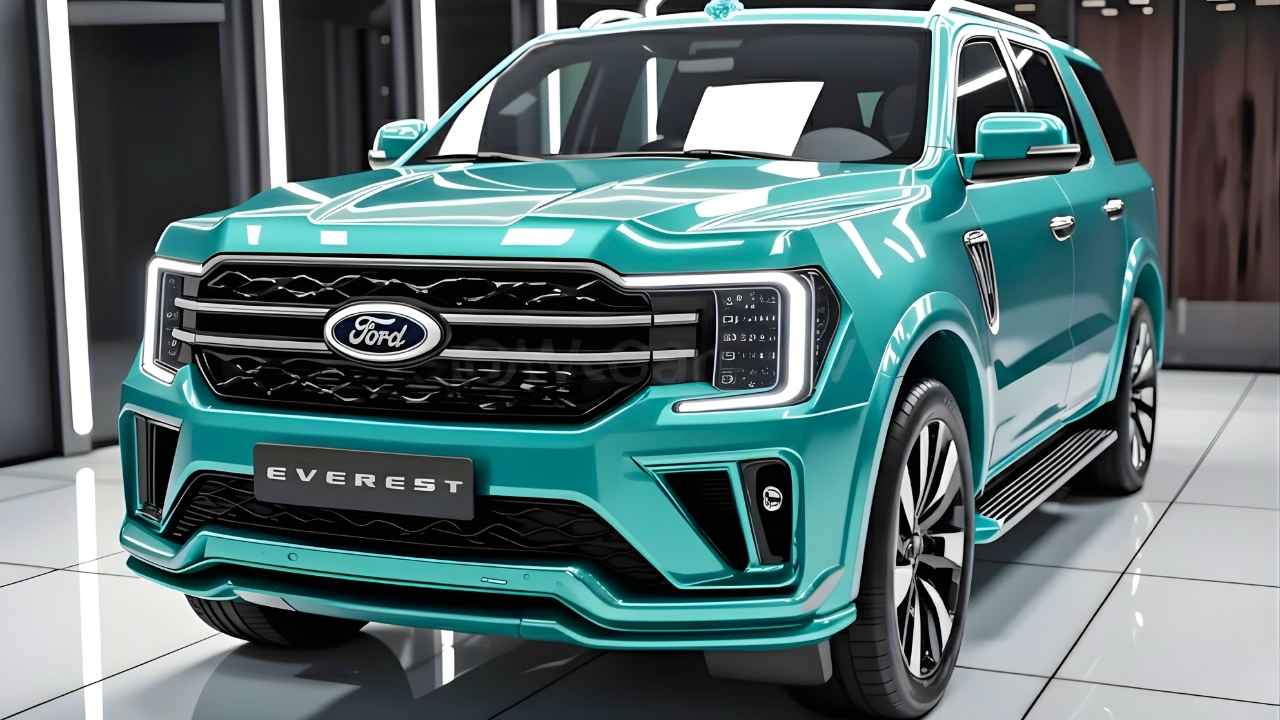
Ford Everest: The 2026 Everest doesn’t try to shock with radical styling. Instead, it sharpens what already worked. The front looks cleaner, with tighter detailing around the grille and lighting that gives it a more modern presence without overdoing chrome or aggression.
From the side, proportions stay upright and purposeful. Subtle tweaks to wheel designs and body lines make it feel less bulky in traffic. It still carries that ladder-frame SUV identity, but with a more polished road presence than before.
Cabin Layout That Finally Feels Thoughtful for Daily Use
Step inside, and the layout feels less truck-like than older Everests. The dashboard design is simpler, with fewer physical buttons and a more intuitive touchscreen placement that doesn’t distract while driving.
Material quality has improved in touchpoints you actually use, like armrests and steering surfaces. Even the second row gets better cushioning, making longer journeys less tiring for passengers.
Key Specifications
| Specification | Details |
|---|---|
| Engine Options | 2.0L Bi-Turbo Diesel / 3.0L V6 Diesel |
| Power Output | Up to ~250 HP (V6) |
| Torque | Up to ~600 Nm |
| Transmission | 10-speed automatic |
| Drivetrain | RWD / 4WD |
| Seating Capacity | 7 |
| Infotainment | Large vertical touchscreen |
| Safety | ADAS suite, multiple airbags |
| Fuel Efficiency | Around 12–14 km/l (real-world estimate) |
Power Delivery That Feels Effortless in Real Conditions
The Everest’s strength shows when you’re not trying to push it hard. The diesel engines deliver torque early, which makes city driving smoother than expected for a large SUV. You don’t need to constantly work the throttle.
On highways, it settles into a relaxed rhythm. Overtakes feel confident, especially with the V6 option. The 10-speed gearbox shifts cleanly, though it occasionally hesitates at low speeds in traffic.
Not Just a Big SUV, It Actually Rides Well
Body-on-frame SUVs usually struggle with ride comfort, but this one manages bumps surprisingly well. It absorbs uneven roads without sending too much shock into the cabin.
At higher speeds, stability improves further. It doesn’t float or feel nervous, which helps on long highway drives. The suspension tuning leans slightly toward comfort rather than sportiness.
Space That Works for Families Without Compromise
All three rows are usable, which isn’t always the case in this segment. The second row slides and reclines, giving flexibility depending on whether you need legroom or cargo space.

The third row suits adults for shorter trips and children for longer ones. Boot space expands well when folded, making it practical for weekend travel or airport runs.
Tech That Feels Useful Instead of Overwhelming
The infotainment system responds quickly and supports wireless connectivity. The screen size helps with navigation visibility, especially in unfamiliar areas.
Driver assistance features are present but not intrusive. Lane assist, adaptive cruise, and parking aids work quietly in the background rather than constantly interrupting the drive.
Built Tough, But Easier to Live With in the City
Despite its size, the Everest feels manageable in urban environments. The steering is light at low speeds, and visibility is improved with better camera systems.

Parking still needs some planning, especially in tighter Indian cities, but the sensors and 360-degree view reduce the stress significantly.
Safety That Covers More Than Just Basics
It comes equipped with multiple airbags, stability control, and a full ADAS package. These systems add confidence, especially during highway driving.
Structural strength remains a strong point. The ladder-frame setup gives a sense of durability, particularly on rough roads or long-distance travel.
Pricing Strategy That Could Shape Its Success
Pricing is not officially confirmed, but expectations place it in the premium SUV bracket. It will likely sit above mainstream models but below luxury brands.
That positioning makes it interesting for buyers who want size and capability without stepping into full luxury territory. Value will depend heavily on variant distribution.
Where It Fits Among Rivals Right Now
The Everest competes with models like the Toyota Fortuner and MG Gloster. Compared to them, it feels more modern inside and slightly more comfortable on rough roads.
It doesn’t try to be the most aggressive or the most luxurious. Instead, it leans toward being a well-rounded SUV that handles everyday life just as well as long trips.
Should You Actually Consider It for Daily Ownership?
If your usage includes highways, occasional rough roads, and family travel, the Everest makes sense. It handles mixed conditions without demanding too many compromises.
For purely city use, its size can feel excessive. But if you want one vehicle that covers multiple roles, this one feels more usable than many large SUVs in its class.